Guía del barrioNeighborhood guide
Key Biscayne
A quince minutos del downtown, Miami baja las revoluciones: cruzas el Rickenbacker Causeway con la bahía turquesa a ambos lados y el skyline encogiéndose en el retrovisor. Key Biscayne es agua mansa, un faro de 1825 y pelotones de ciclistas en peregrinación dominical. Una isla barrera que se siente a un océano de distancia de South Beach.Fifteen minutes from downtown, Miami downshifts: you cross the Rickenbacker Causeway with turquoise bay on both sides and the skyline shrinking in your rearview mirror. Key Biscayne is glassy water, an 1825 lighthouse, and pelotons of cyclists on their Sunday pilgrimage. A barrier island that feels an ocean away from South Beach.
De plantación de cocos a pueblo isleñoFrom coconut plantation to island village
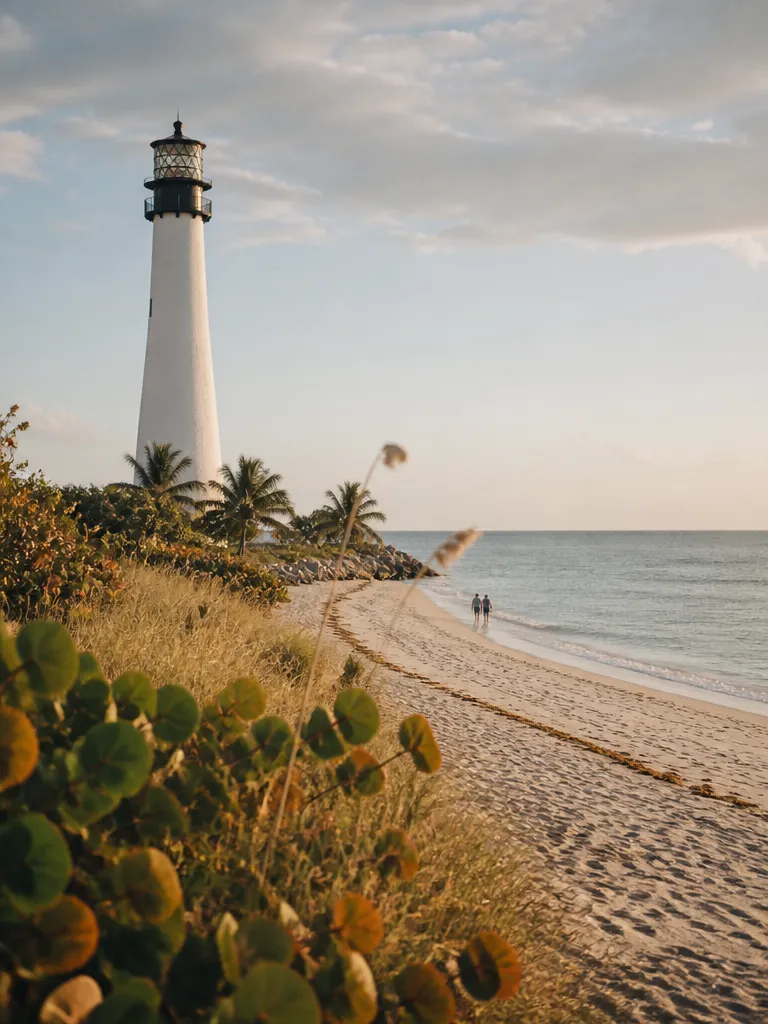
Antes de las torres frente al mar, esta isla barrera fue la plantación de cocos más grande de Estados Unidos continental: William Matheson la sembró de palmeras a principios del siglo XX, y en 1940 su familia donó más de 800 acres al condado a cambio de un puente hasta tierra firme. De ese trato nacieron Crandon Park y el Rickenbacker Causeway. En el extremo sur, el faro de Cape Florida (1825) es la estructura más antigua en pie de Miami-Dade, sobreviviente de huracanes y de un ataque durante las guerras seminolas. Richard Nixon despachó desde su "Casa Blanca de invierno" en Bay Lane, y en 1991 los vecinos votaron independizarse del condado: hoy el Village de Key Biscayne es un pueblo playero de calles arboladas encajado entre dos parques enormes.Before the oceanfront towers, this barrier island was the largest coconut plantation in the continental United States — William Matheson planted it with palms in the early 1900s, and in 1940 his family donated more than 800 acres to the county in exchange for a bridge to the mainland. That deal produced both Crandon Park and the Rickenbacker Causeway. At the island's southern tip, the Cape Florida Lighthouse (1825) is the oldest standing structure in Miami-Dade County, a survivor of hurricanes and a Seminole War attack. Richard Nixon ran his "Winter White House" from Bay Lane, and in 1991 residents voted to incorporate: today the Village of Key Biscayne is a leafy beach town wedged between two enormous parks.
Dos playas, dos caracteresTwo beaches, two personalities
Crandon Park despliega unos tres kilómetros de arena con un banco de arena mar adentro que frena el oleaje: el agua queda tan mansa que parece piscina, y por eso es el plan favorito de familias con niños chicos — muchos caminan hasta el propio sandbar con el agua a la cintura. Hay parking para más de 3,000 autos, mesas de pícnic y concesiones. Al sur, Bill Baggs Cape Florida State Park es otra cosa: más silvestre, con una milla larga de playa que Dr. Beach ha colocado entre las diez mejores del país, senderos y tours gratuitos al faro de 1825 (usualmente dos horarios al día, de jueves a lunes; confirma en el sitio oficial). El parque integra la Red del Ferrocarril Subterráneo: desde este cabo, personas esclavizadas zarparon hacia la libertad en las Bahamas.Crandon Park unrolls about two miles of sand with an offshore sandbar that tames the surf — the water sits so calm it reads like a pool, which is why it's the go-to for families with small kids; plenty of people wade waist-deep out to the sandbar itself. There's parking for over 3,000 cars, picnic tables, and concessions. To the south, Bill Baggs Cape Florida State Park is a different animal: wilder, with a mile-plus of beach that Dr. Beach has ranked among the ten best in the country, nature trails, and free tours of the 1825 lighthouse (usually twice daily, Thursday through Monday; check the official site). The park is part of the Underground Railroad Network to Freedom — from this cape, enslaved people sailed toward liberty in the Bahamas.
La escala obligada: Virginia KeyThe mandatory stopover: Virginia Key
No cruces de largo. Virginia Key, la primera isla del causeway, guarda uno de los humedales de manglar más extensos del sur de Florida y aguas protegidas perfectas para remar. Varios operadores en la isla alquilan kayaks y paddleboards (p. ej., Padl, en el Historic Virginia Key Beach Park), con salidas al atardecer y, de noviembre a mediados de abril, temporada de avistamiento de manatíes; confirma disponibilidad antes de ir. El parque en sí es historia viva: abrió en 1945 como la única playa permitida para la comunidad afroamericana durante la segregación y hoy figura en el Registro Nacional de Lugares Históricos. Remar por los canales de manglar con las torres de Brickell asomando entre las raíces es de esas postales que solo Miami entrega.Don't blow straight past it. Virginia Key, the first island on the causeway, holds one of South Florida's largest mangrove wetlands and sheltered water made for paddling. Several outfitters on the island rent kayaks and paddleboards (e.g., Padl, at Historic Virginia Key Beach Park), with sunset paddles and — from November through mid-April — manatee-spotting season; confirm availability before you go. The park itself is living history: it opened in 1945 as the only beach open to Miami's Black community during segregation and is now listed on the National Register of Historic Places. Paddling the mangrove channels with the Brickell towers peeking through the roots is one of those postcards only Miami delivers.
El clásico de los ciclistas (y la era dorada del tenis)The cyclists' classic (and a golden tennis era)
El Rickenbacker Causeway es la ruta de ciclismo más famosa de Miami: cada fin de semana, pelotones de lycra trepan el puente al amanecer con la bahía a ambos lados. Es de las pocas "cuestas" reales del condado y un rito local absoluto; si vienes a rodar, sal temprano y lleva luces. El tenis también corre por el ADN isleño: el Miami Open se jugó en el Tennis Center at Crandon Park de 1987 a 2018, hasta que el torneo se mudó al Hard Rock Stadium de Miami Gardens en 2019. Las canchas públicas de Crandon siguen abiertas — pocas sedes te dejan pelotear en el mismo complejo donde jugaron los grandes del circuito.The Rickenbacker Causeway is Miami's most famous cycling route: every weekend, lycra-clad pelotons climb the bridge at dawn with the bay spread out on both sides. It's one of the county's only real "hills" and an absolute local ritual — if you come to ride, start early and bring lights. Tennis runs deep here too: the Miami Open was played at the Tennis Center at Crandon Park from 1987 to 2018, before the tournament moved to Hard Rock Stadium in Miami Gardens in 2019. Crandon's public courts are still open — few venues let you hit on the same grounds where the tour's greats once played.
Comer y beber: mesa con vistaEat and drink: a table with a view
Aquí la comida se ordena según el atardecer. En No Name Harbor, dentro de Bill Baggs, Boater's Grill sirve cocina cubana y mariscos frente a un puerto natural donde fondean veleros — pide pescado entero mirando el agua. En el mismo parque, el Lighthouse Café resuelve el almuerzo de playa a pasos del faro. Y en Virginia Key, The Rusty Pelican (desde 1972) es el clásico del golden hour: terraza con fogatas, mariscos y la vista más famosa del skyline de Miami al otro lado de la bahía. Como la cara oeste de estas islas mira a la bahía, el sol se pone justo frente a ti: reserva con tiempo para llegar antes del ocaso.Meals here get scheduled around the sunset. At No Name Harbor, inside Bill Baggs, Boater's Grill serves Cuban cooking and seafood over a natural harbor where sailboats swing at anchor — order the whole fish and watch the water. In the same park, the Lighthouse Café handles beach-day lunch steps from the tower. Over on Virginia Key, The Rusty Pelican (since 1972) is the golden-hour classic: a patio with fire pits, seafood, and the most famous view of the Miami skyline across the bay. Because these islands' western shores face the bay, the sun sets directly in front of you — book ahead and arrive before dusk.
Logística de islaIsland logistics
Necesitas ruedas: el Metrorail no llega, así que ve en auto (peaje solo en sentido hacia la isla, cobrado con SunPass o por placa; consulta tarifas vigentes en miamidade.gov), en bicicleta o en rideshare. Los parques cobran aparte: Bill Baggs ronda los ~$8 por vehículo y Crandon cobra estacionamiento diario por app (PayByPhone) — actívala apenas llegues, porque las multas duelen. Ambos parques cierran al atardecer. Dentro del Village, la app Freebee ofrece traslados eléctricos gratuitos. ¿Tiempo ideal? Un día completo: mañana de playa en Crandon, almuerzo en No Name Harbor, tarde de faro y atardecer sobre la bahía. En fines de semana de temporada alta, cruza antes de las 9 a. m. para esquivar la fila del peaje.You'll need wheels: Metrorail doesn't reach the island, so drive (the toll is charged only heading onto the Key, collected via SunPass or toll-by-plate; check current rates at miamidade.gov), bike, or take a rideshare. The parks charge separately: Bill Baggs runs about ~$8 per vehicle, and Crandon charges daily parking through the PayByPhone app — start it the moment you park, because the fines sting. Both parks close at sundown. Within the Village, the Freebee app offers free electric shuttle rides. Ideal timing? A full day: Crandon beach in the morning, lunch at No Name Harbor, lighthouse in the afternoon, sunset over the bay. On high-season weekends, cross before 9 a.m. to beat the toll backup.
Esta semana en Key BiscayneThis week in Key Biscayne
Tortugas, mareas y conservación en Bill BaggsTurtles, Tides and Tales at Bill Baggs
Charla de Rumya Sundaram en Sunset Pavilion D-18. No socios: $22.04 con cargos; socios acreditados gratis. Entrada al parque aparte; se requiere ticket.Rumya Sundaram speaks at Sunset Pavilion D-18. Nonmembers: $22.04 including fees; verified members attend free. Park admission is extra; a ticket is required.
Imperdibles de siempreAll-time essentials
Crandon ParkCrandon Park Beach
Tres kilómetros de playa calma protegida por un banco de arena, ideal con niños. El secreto mejor guardado está a un puente de Brickell.Two miles of calm, sandbar-protected beach that's perfect with kids — Key Biscayne's best-kept secret, one causeway from Brickell.
Kayak y paddleboard en Virginia KeyKayak & Paddleboard at Virginia Key
Rema entre manglares con el skyline de Brickell de fondo: alquiler de kayaks, SUP y bicis de trail camino a Key Biscayne. Deporte con vista de película.Paddle through mangroves with the Brickell skyline behind you — kayak, SUP and trail-bike rentals on the way to Key Biscayne. A workout with a movie backdrop.
Preguntas frecuentesFrequently asked
- ¿Es seguro Key Biscayne?Is Key Biscayne safe?
- Sí: es una de las zonas residenciales más tranquilas de Miami-Dade. Las precauciones son las de cualquier playa — corrientes, sol fuerte y no dejar objetos a la vista dentro del auto en los estacionamientos de los parques.Yes — it's one of the calmest residential areas in Miami-Dade. The precautions are standard beach fare: currents, strong sun, and not leaving valuables visible in your car at the park lots.
- ¿Cómo llego a Key Biscayne?How do I get to Key Biscayne?
- En auto por el Rickenbacker Causeway desde la I-95 o la US-1 (peaje electrónico solo de ida), en bicicleta o en rideshare. No hay Metrorail y el transporte público a la isla es limitado, así que planifica con vehículo.By car via the Rickenbacker Causeway from I-95 or US-1 (electronic toll inbound only), by bike, or by rideshare. There's no Metrorail and public transit to the island is limited, so plan on having wheels.
- ¿Cuánto tiempo necesito?How much time do I need?
- Un día completo para las dos caras de la isla: Crandon en la mañana y Bill Baggs en la tarde, con parada en Virginia Key. Si solo tienes medio día, elige un parque y quédate al atardecer.A full day covers both sides of the island: Crandon in the morning, Bill Baggs in the afternoon, with a Virginia Key stop in between. With only half a day, pick one park and stay for sunset.
- ¿Es apto para niños?Is it good for kids?
- Muy apto: el sandbar de Crandon Park deja el mar tan calmo como una piscina, y hay zonas de pícnic con sombra y concesiones. Bill Baggs también funciona en familia, con el faro y un café a pasos de la arena.Very — Crandon Park's sandbar keeps the ocean as calm as a pool, with shaded picnic areas and concessions nearby. Bill Baggs works for families too, with the lighthouse and a café steps from the sand.
- ¿Qué se puede hacer gratis?What can I do for free?
- El tour guiado al faro (incluido con la entrada del parque), los traslados Freebee dentro del Village, cruzar el causeway en bicicleta y las vistas del skyline desde el puente. Pagas el peaje del auto, la entrada de Bill Baggs y el parking de Crandon.The guided lighthouse tour (included with park admission), Freebee rides within the Village, cycling across the causeway, and the skyline views from the bridge. You do pay the car toll, Bill Baggs admission, and Crandon parking.
- ¿Se puede subir al faro de Cape Florida?Can you climb the Cape Florida Lighthouse?
- Sí, en tours guiados gratuitos que suelen salir dos veces al día de jueves a lunes, sin reserva previa. Llega con anticipación y confirma los horarios del día en el sitio oficial del parque.Yes, on free guided tours that typically run twice a day, Thursday through Monday, no reservation needed. Arrive early and confirm that day's times on the park's official website.