Guía del barrioNeighborhood guide
Design District
En el Design District hasta el estacionamiento tiene fachada de museo. Este puñado de cuadras al norte de Midtown concentra una cúpula geodésica flotante, boutiques que parecen esculturas y estrellas Michelin sobre la misma tierra donde hace un siglo se cultivaban piñas. Es el barrio más pulido de Miami y, paradójicamente, uno de los que más arte regala gratis.In the Design District, even the parking garage has a museum-worthy facade. This handful of blocks north of Midtown packs a floating geodesic dome, boutiques that double as sculpture, and Michelin stars onto land that grew pineapples a century ago. It's Miami's most polished neighborhood — and, oddly, one of its most generous with free art.
De plantación de piñas a capital del diseñoFrom pineapple farm to design capital
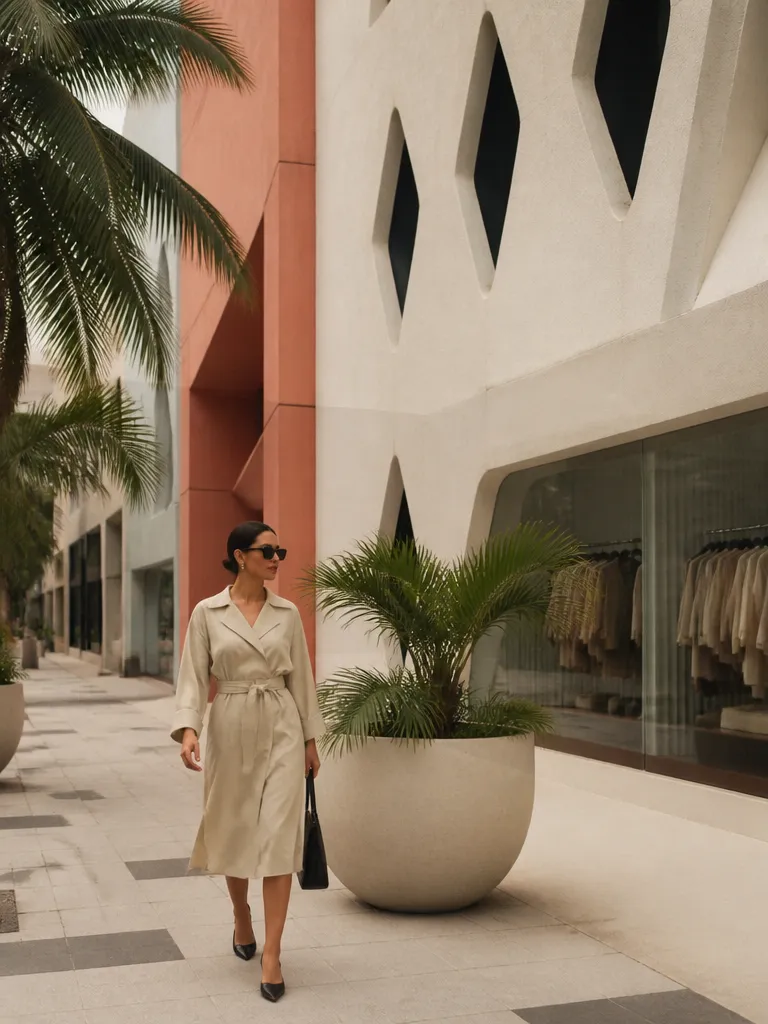
Antes del mármol y las vitrinas hubo piñas. A comienzos del siglo XX, esta esquina del barrio Buena Vista era tierra agrícola, hasta que T.V. Moore —apodado el rey de la piña— levantó en 1921 el Moore Building para su negocio de muebles, y alrededor de él la zona se ganó su fama de distrito del diseño. Tras décadas de esplendor y un largo declive en los ochenta, el desarrollador Craig Robins (Dacra) empezó a comprar edificios deteriorados y a convencer a diseñadores y casas de lujo de apostar por el barrio. El resultado es un experimento urbano sin réplica: Sou Fujimoto firmó el Palm Court, Barbarito Bancel la fachada de concreto plisado de Dior, y hasta el estacionamiento —el Museum Garage— se encargó a cinco estudios de arquitectura distintos.Before the marble storefronts, there were pineapples. In the early 1900s this corner of the Buena Vista neighborhood was farmland, until T.V. Moore — the so-called Pineapple King — built the Moore Building in 1921 for his furniture business, and the area earned its design moniker around it. After decades of prosperity and a long slide into disrepair by the 1980s, developer Craig Robins of Dacra began buying up crumbling buildings and persuading designers and luxury houses to bet on the neighborhood. The result is an urban experiment with no real equivalent: Sou Fujimoto designed Palm Court, Barbarito Bancel sculpted Dior's pleated concrete facade, and even the parking structure — Museum Garage — was handed to five different architecture studios.
Arte público gratis en cada esquinaFree public art on every corner
El barrio funciona como un museo gratuito a cielo abierto. La pieza estrella es el Fly's Eye Dome de Buckminster Fuller: una cúpula geodésica de fibra de vidrio —diseño de 1979 completado en 2014 con tecnología moderna— que parece flotar sobre un espejo de agua en el Palm Court (140 NE 39th St) y además sirve de entrada al estacionamiento subterráneo. En el atrio del Moore Building cuelga Elastika, la instalación que Zaha Hadid estiró como chicle entre cuatro pisos en 2005. En el nivel superior del Palm Court (140 NE 39th St, segundo piso), Netscape de Konstantin Grcic es una telaraña de acero con 24 columpios donde sí te puedes sentar. Y el Museum Garage es un cadáver exquisito arquitectónico: cinco fachadas dispares de estudios como WORKac, J. Mayer H. y Clavel Arquitectos, curadas por Terence Riley.The neighborhood doubles as a free open-air museum. The showpiece is Buckminster Fuller's Fly's Eye Dome, a fiberglass geodesic bubble — a 1979 design completed in 2014 with modern technology — that appears to float on a reflecting pool in Palm Court (140 NE 39th St) while doubling as the entrance to the underground garage. Inside the Moore Building's atrium hangs Elastika, the installation Zaha Hadid stretched like chewing gum across four floors in 2005. On Palm Court's second level (140 NE 39th St), Konstantin Grcic's Netscape is a steel web of 24 hanging swing seats you're actually allowed to use. And Museum Garage is an architectural exquisite corpse: five clashing facades by studios including WORKac, J. Mayer H., and Clavel Arquitectos, curated by Terence Riley.
ICA Miami y vitrinas que son esculturasICA Miami and storefronts as sculpture
El Institute of Contemporary Art (ICA Miami, 61 NE 41st St) es uno de los mejores planes gratis de la ciudad: admisión sin costo todo el año, tres pisos de arte contemporáneo y un jardín de esculturas. Abre de miércoles a domingo y conviene reservar boleto gratuito en línea porque el aforo es limitado. El shopping aquí es deporte de contemplación: la flagship de Hermès (163 NE 39th St) con su escalera ondulante y su jinete de colores en la azotea, Dior justo enfrente (162 NE 39th St) bajo paneles de concreto que caen como tela plisada, más Chanel, Louis Vuitton, Gucci, Celine y compañía. Nadie te cobra por mirar, y las propias tiendas compiten por tener la arquitectura más fotogénica de la cuadra.The Institute of Contemporary Art (ICA Miami, 61 NE 41st St) is one of the city's best free outings: no-cost admission year-round, three floors of contemporary art, and a sculpture garden. It's open Wednesday through Sunday, and it's smart to reserve a free ticket online since capacity is limited. Shopping here is a spectator sport: the Hermès flagship (163 NE 39th St) with its undulating staircase and a brightly colored horseman perched on the roof, Dior directly across the street (162 NE 39th St) beneath concrete panels draped like pleated fabric, plus Chanel, Louis Vuitton, Gucci, Celine and friends. Nobody charges you to look — and the stores themselves compete for the most photogenic architecture on the block.
Comer y beber con estrellasEating and drinking among the stars
Pocas zonas de Miami concentran tanto pedigrí gastronómico por metro cuadrado. L'Atelier de Joël Robuchon es el único restaurante de Florida con dos estrellas Michelin: 34 asientos en barra frente a la cocina abierta. Un piso abajo, Le Jardinier pone las verduras al centro con técnica francesa y estrella propia, y COTE reinventa el steakhouse coreano con parrillas en la mesa y otra estrella más. Mother Wolf sirve pastas romanas hechas a mano, y Michael's Genuine Food & Drink —el pionero de Michael Schwartz que puso al barrio en el mapa gastronómico en 2007— sigue firme con su cocina de mercado. Para algo casual: MIA Market, un food hall de puestos con firma de chef, o tacos al paso en Tacombi. Reserva con anticipación para las mesas grandes.Few corners of Miami pack this much culinary pedigree per square foot. L'Atelier de Joël Robuchon is Florida's only two-Michelin-starred restaurant: 34 counter seats facing the open kitchen. One floor down, Le Jardinier puts vegetables center stage with French technique and a star of its own, while COTE reinvents the Korean steakhouse with tabletop grills and another star. Mother Wolf turns out handmade Roman pastas, and Michael's Genuine Food & Drink — Michael Schwartz's pioneer that put the neighborhood on the dining map back in 2007 — is still going strong with its market-driven cooking. For something casual, hit MIA Market, a chef-driven food hall, or grab tacos at Tacombi. Book ahead for the marquee tables.
Guía práctica: cómo moverteThe practical playbook: getting around
El distrito es compacto y absolutamente caminable: unas cuantas cuadras entre NE 38th y NE 42nd Street, con NE 2nd Avenue como columna vertebral. Si vienes en auto, el Museum Garage o el estacionamiento subterráneo del Palm Court son las opciones lógicas; las primeras horas cuestan pocos dólares (consulta tarifas vigentes). El trolley gratuito de la Ciudad de Miami —ruta Wynwood— conecta el barrio con Midtown y Wynwood, y un rideshare desde South Beach o Downtown toma unos 10-15 minutos según el tráfico. La jugada perfecta: mañana de murales en Wynwood, almuerzo en Midtown y tarde de arte y vitrinas aquí; los tres barrios quedan a minutos uno del otro.The district is compact and thoroughly walkable: a few blocks between NE 38th and NE 42nd Street, with NE 2nd Avenue as its spine. If you're driving, Museum Garage or the underground garage beneath Palm Court are the obvious moves; the first few hours cost just a few dollars (check current rates). The City of Miami's free trolley — the Wynwood route — links the neighborhood with Midtown and Wynwood, and a rideshare from South Beach or Downtown runs about 10–15 minutes depending on traffic. The ideal play: murals in Wynwood in the morning, lunch in Midtown, then an afternoon of art and window-shopping here — all three neighborhoods sit minutes apart.
Imperdibles de siempreAll-time essentials
ICA Miami (entrada gratis)ICA Miami (Free Admission)
Arte contemporáneo de primer nivel con entrada siempre gratuita, en pleno Design District. Combínalo con las boutiques y la arquitectura del barrio.First-rate contemporary art that's always free, right in the Design District — pair it with the neighborhood's boutiques and architecture.
Preguntas frecuentesFrequently asked
- ¿Es seguro el Design District de Miami?Is the Miami Design District safe?
- Sí: es un distrito comercial de lujo, muy vigilado y con movimiento constante en horario de tiendas y restaurantes. Como en cualquier zona urbana de Miami, aplica la precaución habitual de noche cuando las calles se vacían.Yes — it's a heavily patrolled luxury retail district with steady foot traffic during shopping and dining hours. As anywhere in urban Miami, use standard precautions at night once the streets empty out.
- ¿Cómo llego al Design District?How do I get to the Design District?
- Está justo al norte de Midtown, entre NE 38th y NE 42nd Street sobre NE 2nd Avenue, con acceso rápido desde la I-195. Puedes llegar en auto (estaciona en el Museum Garage), en rideshare o con el trolley gratuito de la ruta Wynwood.It sits just north of Midtown, between NE 38th and NE 42nd Street along NE 2nd Avenue, with quick access from I-195. Arrive by car (park at Museum Garage), by rideshare, or on the free Wynwood-route trolley.
- ¿Cuánto tiempo necesito para visitarlo?How much time do I need to visit?
- Entre 2 y 4 horas alcanzan para el arte público, las vitrinas y un café. Suma medio día si incluyes el ICA Miami y un almuerzo con calma.Two to four hours covers the public art, the storefronts, and a coffee. Make it half a day if you add ICA Miami and an unhurried lunch.
- ¿Es un plan apto para niños?Is it kid-friendly?
- Sí, más de lo que parece: los columpios de Netscape, la cúpula de Fuller y las fachadas del Museum Garage funcionan como parque de descubrimientos, y el ICA es gratis. Eso sí, es un barrio de vitrinas de lujo: funciona mejor como visita corta que como día completo con peques.Yes, more than you'd expect: the Netscape swings, Fuller's dome, and the Museum Garage facades work like a discovery playground, and ICA Miami is free. That said, it's a luxury-retail neighborhood — better as a short stop with kids than a full day.
- ¿Qué se puede hacer gratis en el Design District?What can I do for free in the Design District?
- Casi todo lo mejor: la colección completa de arte público (el domo de Fuller, Elastika de Zaha Hadid, los columpios de Netscape, las fachadas del Museum Garage), el museo ICA Miami y el trolley. Solo pagas si compras o te sientas a comer.Almost everything worth doing: the entire public art collection (Fuller's dome, Zaha Hadid's Elastika, the Netscape swings, the Museum Garage facades), the ICA Miami museum, and the trolley. You only spend money if you shop or sit down to eat.
- ¿Qué es el Fly's Eye Dome y dónde está?What is the Fly's Eye Dome and where is it?
- Es una cúpula geodésica de fibra de vidrio que Buckminster Fuller diseñó en 1979 y que se completó en 2014 con materiales modernos. Flota sobre un espejo de agua en el Palm Court (140 NE 39th St), sirve de entrada al estacionamiento subterráneo y es la foto más repetida del barrio.It's a fiberglass geodesic dome Buckminster Fuller designed in 1979, completed in 2014 with modern materials. It floats on a reflecting pool in Palm Court (140 NE 39th St), doubles as the entrance to the underground garage, and is the neighborhood's most photographed spot.